Payment fraud rarely looks like fraud. It looks like a routine email: we've changed banks, please update our details. The defense that works is old and simple. Call the vendor and confirm.
But the call only protects you if the phone number didn't come from the same place as the request. A number printed on the new invoice, or in the email asking for the change, goes straight back to whoever sent it.
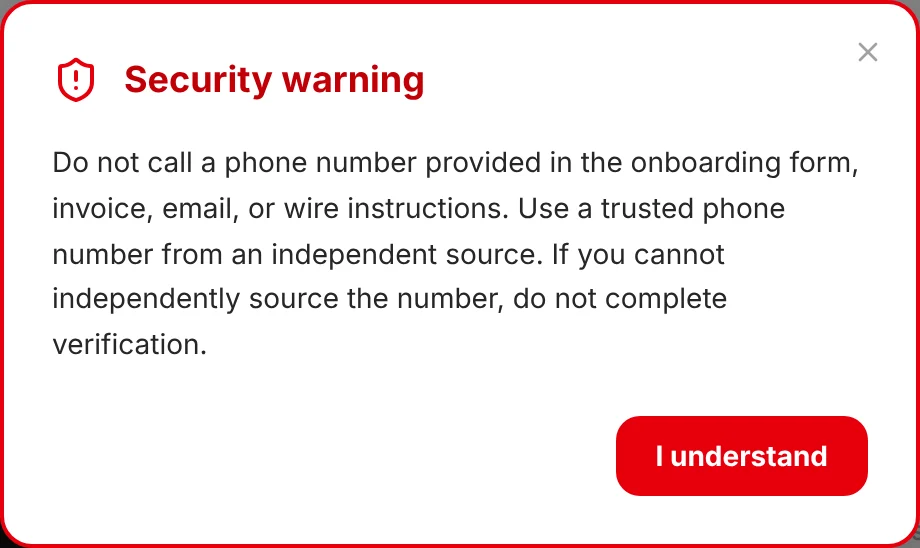
So in the vendor onboarding build, the warning comes first. Before anyone can log a verification call, a red box says: Do not call a phone number provided in the onboarding form, invoice, email, or wire instructions. Use a trusted phone number from an independent source. If you cannot independently source the number, do not complete verification. The only button is "I understand."
Then the call log asks four things: the number you called, how you got it, who you spoke with, and when. The second question is the important one. It makes the person stop and think about where the number came from, at the exact moment it matters.
None of this is a training module or a policy PDF in a shared drive. The policy lives in the step. A new vendor can be set up and assigned work the same day, and payment stays locked until the current bank details have been confirmed this way.
What it means for your team
- Put the rule inside the step.People follow the policy they see while they're doing the work, not the one they read during onboarding.
- Ask the question that makes people pause."How did you get this number?" does more than any reminder to be careful.
- Keep setup fast and payment gated.Work can start right away. Money is the only thing that waits.