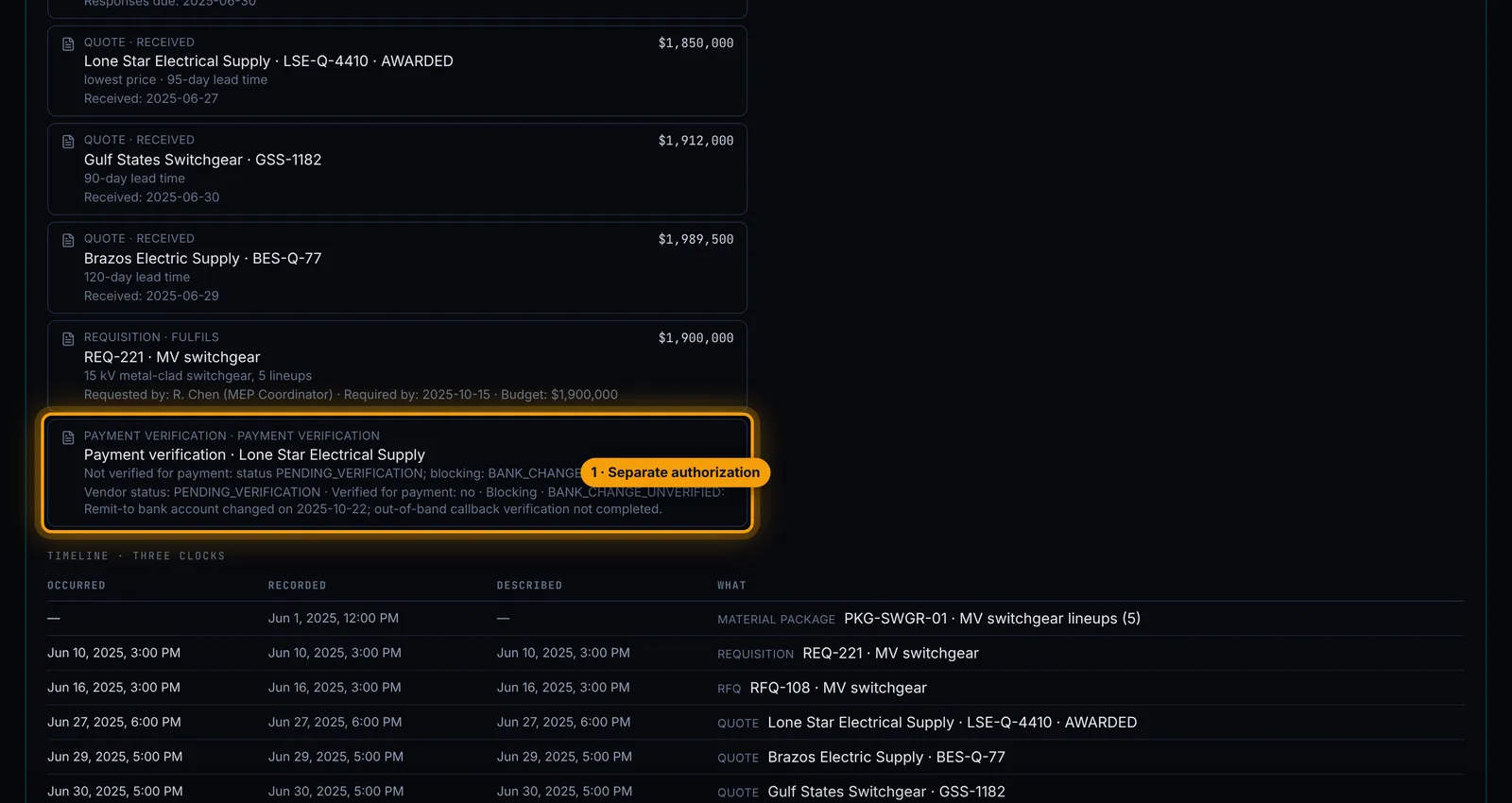
In a lot of finance teams, the approval on a purchase order does more work than anyone intended. Once the PO is signed, the invoice behind it feels pre-cleared. Nobody decided that. It's just how work flows when everyone is busy and the queue is long.
But the two sign-offs answer different questions. Approval asks: should we buy this, from this vendor, at this price? Payment asks something else: is the account we're about to send money to really theirs, today?
The second answer can change after the first one is settled. Bank details can change between the purchase order and the invoice, and the request to change them usually looks like a routine email.
So the procurement build keeps them apart. A purchase order can be approved while the vendor is still not cleared for payment, and the screen shows both states side by side. In the demo, the PO is approved, the bank account on file has changed, and the callback is still open. Nothing about the first sign-off hides the second.
It isn't a risk score on a dashboard, and it isn't a reminder in someone's inbox. It's a rule in the record: payment readiness is its own state, with its own evidence, and it doesn't inherit anything from the approval.
What it means for your team
- Name the second question.If approval and payment are one step today, writing them down as two steps costs nothing and closes a real gap.
- Show both states where people work.The person approving an invoice should see the payment status on the same screen, not in another system.
- Let the system hold the line.A busy person at month-end shouldn't be the only control. The record should refuse to move until the evidence is there.