The easy way to build a compliance tool right now is to ask a model to write the policy. It will produce something fluent in seconds. Ask again tomorrow and it will produce something different, also fluent.
That's a problem when an assessor is reading. The policy, the procedure, the evidence plan and the answers in the interview all have to agree with each other, and they have to say the same thing next month as they do today.
So the CMMC Controls Generator doesn't let AI write the documents. Each control is a structured record: what it requires, who owns it, and what proves it. The company's setup is a set of mappings: which product handles identity, which logs show sign-ins, who approves access. Fixed rules combine the two. The same inputs always produce the same document.
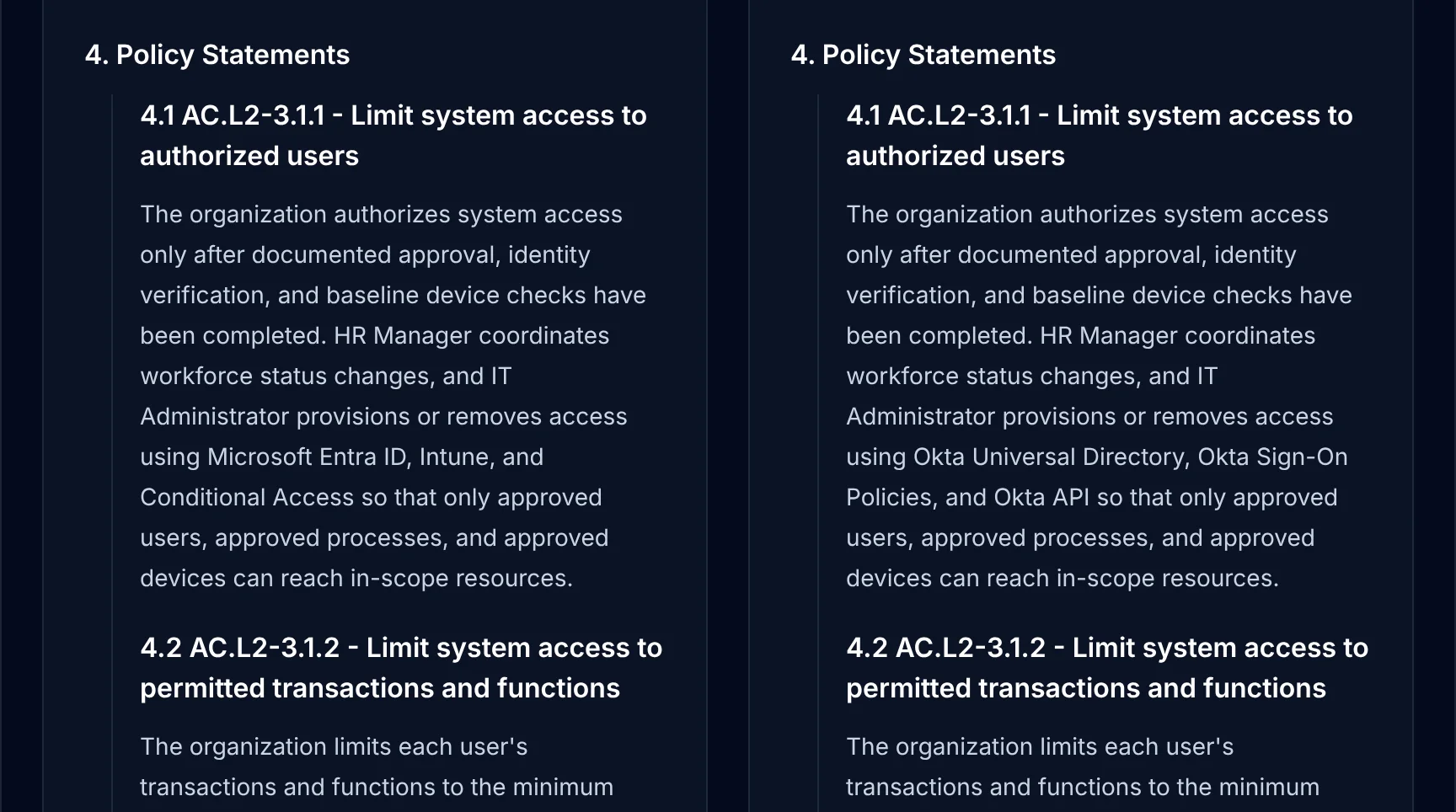
The payoff shows when something changes. Switch the identity provider from Microsoft Entra ID to Okta and every document that mentions it changes with it, while the commitments stay exactly the same. Nothing has to be rewritten by hand, and nothing drifts.
There's room for AI around the edges, like explaining a gap in plain English. But the documents themselves come from the records, because for this kind of paperwork the record is the point.
What it means for your team
- Decide what has to be reproducible.If you'd need to produce the same answer for an auditor next year, it shouldn't depend on how a model felt today.
- Keep one source of truth.Policy, procedure and evidence should come from the same record, so they can't quietly contradict each other.
- Fluency isn't evidence.A well-written paragraph is not proof that the control works. The record is.