A lot of what's sold as AI for operations right now makes reports look finished. Give a model your numbers and it will write a confident paragraph about them. It will also describe a figure it can't trace, because sounding complete is what it's good at.
That's the opposite of what an operations team needs. The useful thing on a cost report is rarely the total. It's the line nobody approved, the invoice with no purchase order, the change that happened before anyone wrote it down. That's where the work is.
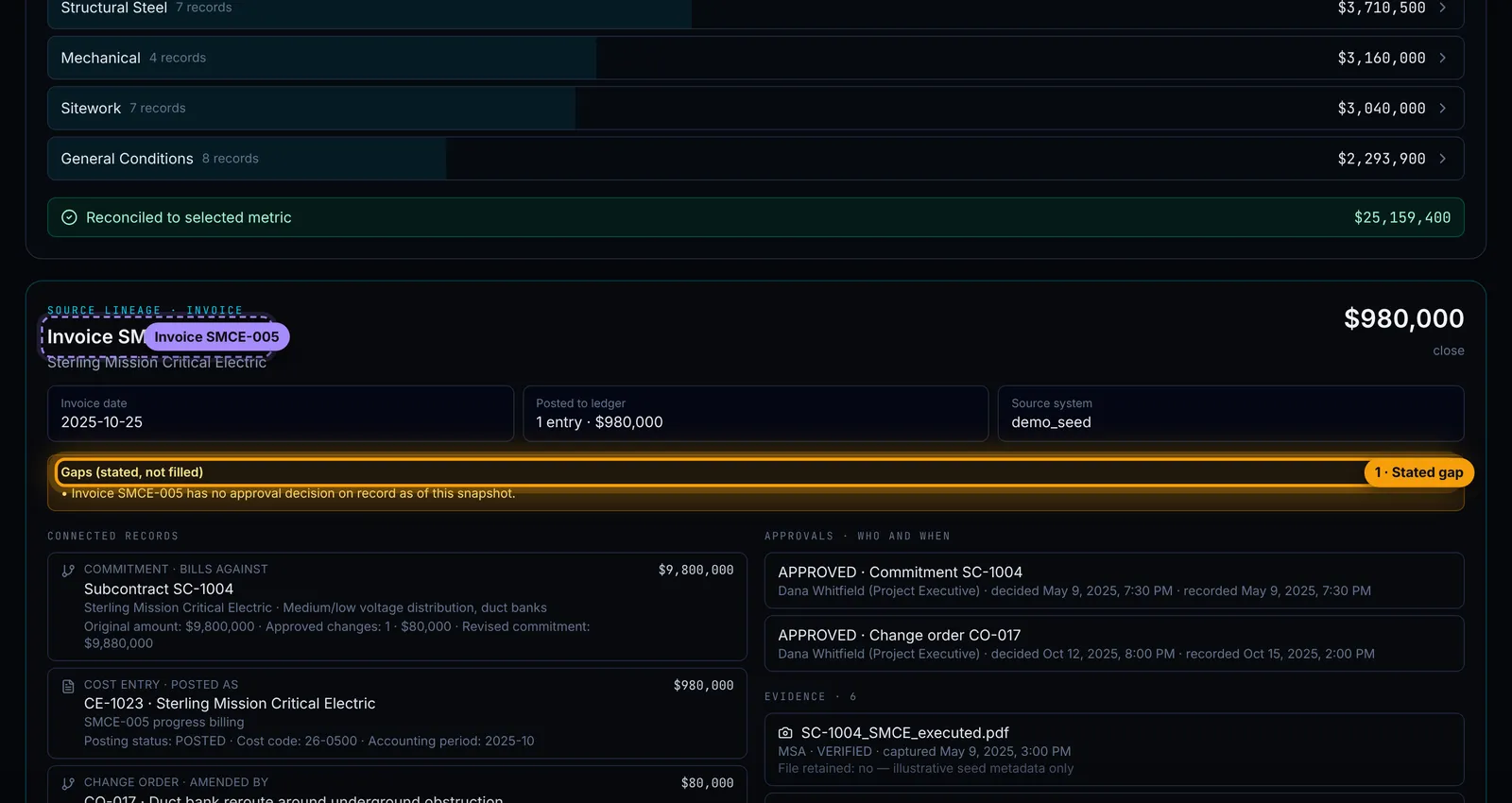
In the traceable-metrics build, every number opens to the records behind it. When an invoice has been posted to cost with no approval decision on record, the lineage says exactly that. It doesn't estimate, borrow a value from a similar record, or leave the space blank and hope nobody clicks.
The rule behind it is short enough to fit on a sticky note: an unknown value is a gap, stated as such, not guessed. The same rule shapes the explanations. When a number changes, the answer is assembled from the source records, so it can only say what the records support.
What it means for your team
- Ask your reports where they'd show a gap.If the answer is nowhere, the gaps are still there. They're just being smoothed over.
- Treat missing as a state."No approval on record" is information. Someone can act on it. A blank or a guess can't be acted on.
- Prefer explanations built from records.If a number moved, the reason should come from the invoices and change orders, not from a summary written about them.