@corporatephoebe on TikTok described corporate reporting hell, and anyone who has worked in operations has lived it. Management wants visibility, so the team builds a dashboard. Then they want more detail, so more metrics go in. Then the metrics need explaining, so there's another report. Then someone asks for the original data in Excel.
Every round adds a layer on top of the numbers. None of them answers the question underneath all of it: where did this number come from?
So I built the fix before bedtime, on my phone, from the couch, with an AI coding assistant doing the typing while I made the decisions. I didn't start from scratch. ICARUS already held the records for an illustrative construction project: ledger entries, invoices, subcontracts, change orders, approvals and field evidence. What was missing was a path from a number down to them.
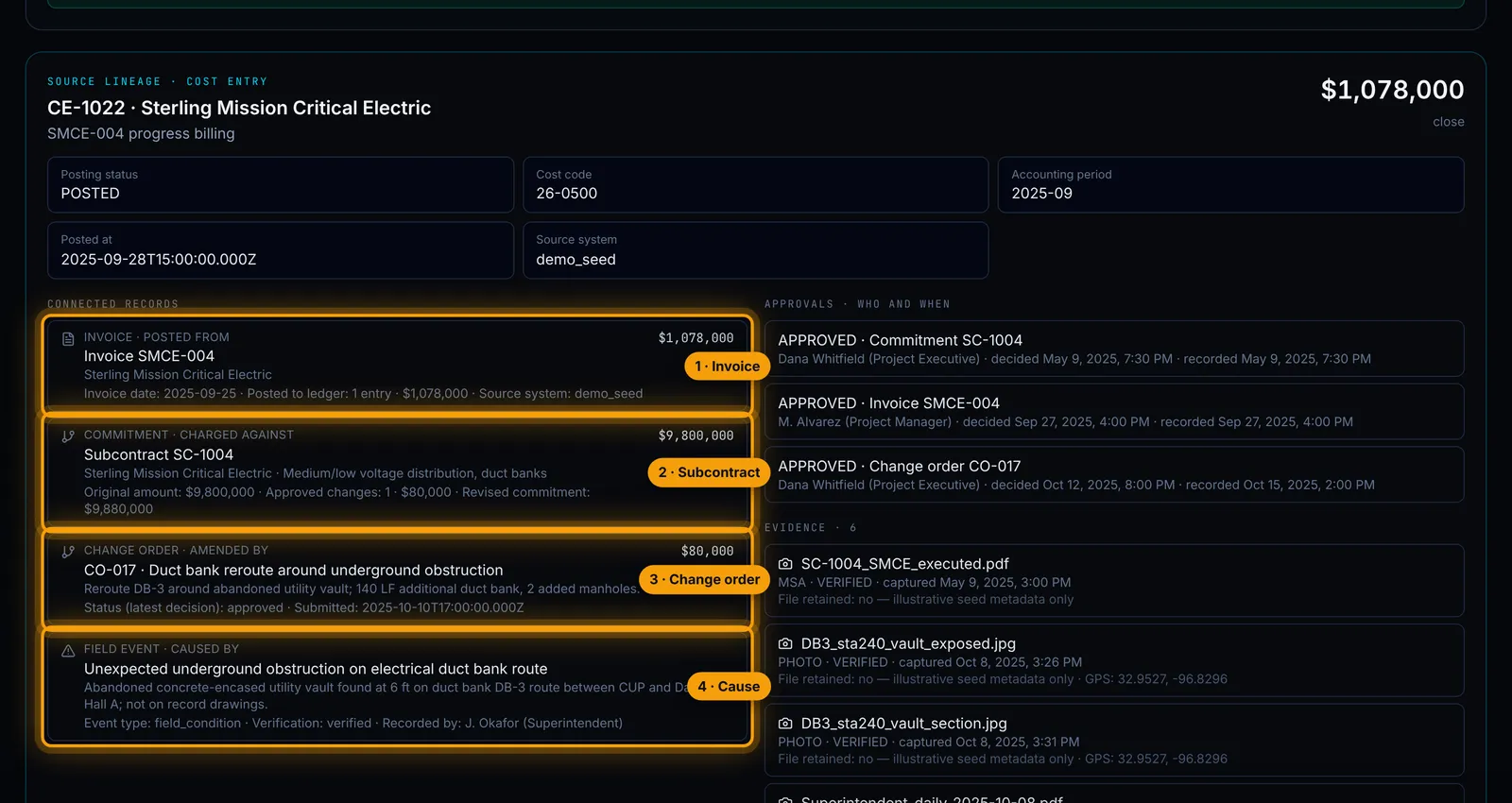
Now you click Actual costs. It splits by category and adds up exactly. Click Electrical, then a vendor, then a ledger line, and you're looking at the invoice, the subcontract it was charged against, the change order that amended it, the field event that caused the change, and the photo from site.
No new report. No export to Excel. The detail was always in the records. It needed a way to get to it.
Then I asked for the same thing for procurement, reusing what already existed. That became Traceable Procurement.
What it means for your team
- Listen for the loop.When people describe building report after report, the missing piece usually isn't another report. It's being able to trace the number.
- Start from what exists.The fix reused records that were already there, and then the same engine for procurement. Small builds compound.
- Show the working thing.A demo you can click answers "where did this come from?" faster than any deck about visibility.